Complete guide to restaurant AI implementation: Reduce labor costs by $10,000/month, cut food waste by 50%, and automate operations with proven strategies and real case studies.
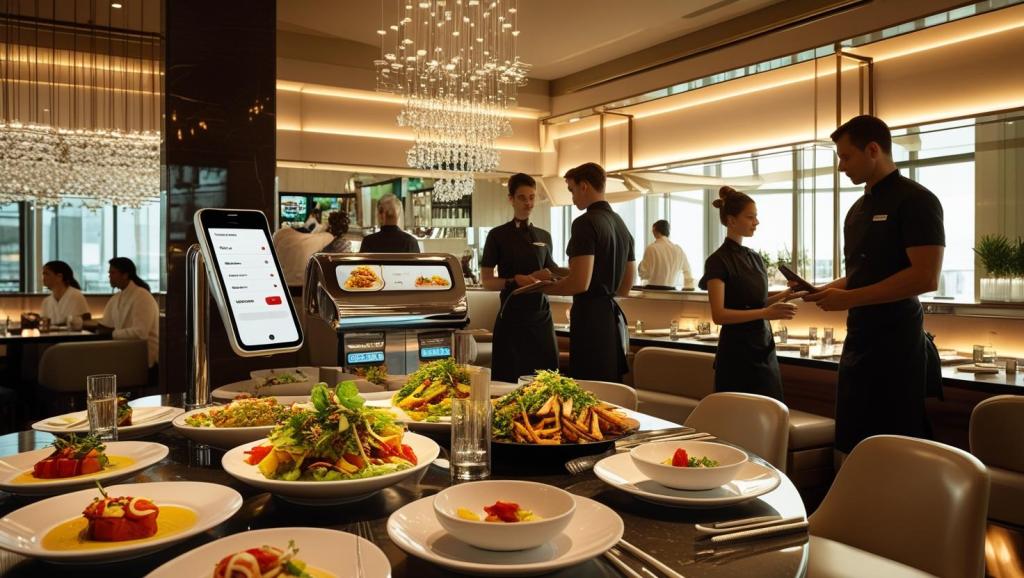
The restaurant industry AI revolution is here. While labor costs account for 30% to 35% of a restaurant’s revenue and food waste costs the global economy $1 trillion annually, smart restaurant owners are implementing AI technology for restaurants to solve these profit-draining challenges.
Key Industry Statistics:
- 34% of restaurants have adopted AI technology, with 48% planning implementation in 2025
- Restaurant AI market growing from $9.68 billion to $49 billion over five years
- ROI Impact: Each $1 saved in food waste creates $14 in additional revenue
1. AI Restaurant Scheduling: Save $10,000+ Monthly on Labor Costs
The Problem: Poor scheduling wastes thousands monthly through overstaffing during slow periods and understaffing during rushes, directly killing profitability and customer satisfaction.
The AI Solution: Restaurant scheduling software with AI analyzes historical sales data, weather patterns, local events, and seasonal trends to create optimized staff schedules that perfectly match predicted demand.
Proven Labor Cost Savings
Real Results: One beachfront restaurant using Fourth’s AI scheduling platform cut labor costs by $9,000-10,000 per month by building schedule templates based on predictive analytics. The system automatically adjusts staffing levels based on factors like sunny versus rainy weekends.
Measurable Benefits:
- AI scheduling saves managers 6+ hours per week
- 41% of restaurants investing in AI sales forecasting and scheduling
- Eliminates costly overstaffing and service-damaging understaffing
Top AI Scheduling Tools: Lineup.ai, 7shifts, Fourth, and HotSchedules lead with restaurant workforce managementthat forecasts staffing needs up to four weeks in advance.
2. AI Food Waste Management: Cut Waste by 50% and Boost Profits
The Problem: Food waste accounts for 4-10% of purchased food, with 65% of foodservice waste from overproduction, spoilage, or leftovers. This waste directly destroys profit margins.
The AI Solution: Restaurant inventory management software with AI uses computer vision and machine learning to track waste patterns, predict demand, and optimize purchasing decisions in real-time.
Dramatic Food Waste Reduction Results
KITRO Success Story: Restaurants using KITRO’s AI food waste tracking achieved 23-51% food waste reduction, with food waste costs per meal reduced by up to 39% compared to baseline.
National Chain Results: A major fast-food chain reduced food waste by 15% using AI inventory management, saving millions annually through demand-based reorder levels.
AI Food Waste Technologies:
- Smart waste bins with AI cameras automatically track, weigh, and categorize food waste
- Predictive inventory systems analyze sales patterns and external factors for optimal stock levels
- Automated reordering prevents both stockouts and spoilage-causing excess inventory
Financial Impact: Waste reduction investments yield 7:1 ROI—every dollar spent returns up to six dollars in savings.
3. AI Drive-Thru Technology: Automate Customer Service and Boost Sales
The Problem: Manual drive-thru and phone ordering consumes valuable staff time while introducing human errors that hurt customer satisfaction and average order values.
The AI Solution: Restaurant voice AI systems handle customer interactions with 90%+ accuracy, freeing staff for higher-value tasks while improving order precision and upselling.
Major Chain AI Drive-Thru Success Stories
White Castle’s Massive Rollout: White Castle implementing AI voice bots in 100+ drive-thru lanes through SoundHound partnership, targeting faster service and reduced labor costs.
Taco Bell’s Proven Expansion: Taco Bell expanding AI voice technology across U.S. locations, already operational at 100+ locations in 13 states with reported improvements in accuracy and speed.
Performance Statistics:
- SoundHound AI handles 90%+ of orders without human intervention
- AI speeds up drive-thru lanes by 10% versus human order-taking
- Consistent upselling increases average check sizes
Implementation Learning: While McDonald’s ended its IBM AI partnership, the company continues evaluating voice ordering solutions, showing the importance of finding the right AI partner and technology fit.
4. Restaurant Kitchen Automation: Robots and AI for Consistent Quality
The Problem: Kitchen operations involve repetitive tasks, inconsistent portioning, and complex inventory management that strain efficiency and increase food costs.
The AI Solution: Restaurant automation technology including robotic assistance and AI-powered kitchen management ensures consistency, reduces waste, and speeds production.
Advanced Kitchen AI Implementations
Chipotle’s Robot Revolution:
- “Autocado” robot processes avocados in 26 seconds, handling Chipotle’s 5+ million annual avocado cases
- “Augmented Makeline” robot builds bowls and salads, managing 65% of digital orders
Domino’s Predictive Kitchen: Domino’s AI predicts customer orders, starting pizza production before orders arrive, dramatically cutting wait times.
AI Kitchen Technologies:
- Computer vision monitoring ensures food quality and presentation consistency
- AI recipe optimization suggests cost-effective ingredient substitutions during price fluctuations
- Automated inventory alerts prevent stockouts of critical ingredients
- Predictive production planning based on historical demand patterns
5. AI Menu Optimization: Maximize Profitability with Data-Driven Decisions
The Problem: Determining which menu items drive maximum profitability while satisfying customers requires complex analysis of costs, popularity, and market dynamics.
The AI Solution: Restaurant analytics software with AI analyzes ingredient costs, labor requirements, customer preferences, and competitor pricing to optimize menu profitability and strategic positioning.
AI-Powered Menu Engineering Success
Profitability Analysis Results: A casual dining chain using AI menu engineering significantly improved profit margins by featuring high-margin items more prominently based on AI recommendations.
Smart Menu Technologies:
- Real-time ingredient cost monitoring with automatic price adjustments
- Competitor price analysis for strategic market positioning
- Seasonal demand prediction for optimal promotional timing
- Customer preference analysis enabling personalized recommendations
Leading Platforms: Starbucks’ Deep Brew AI provides personalized mobile app recommendations, while PopMenu offers AI marketing for restaurants with automated campaigns and customer engagement optimization.

Restaurant AI ROI: Proven Financial Benefits and Implementation Costs
Compelling Investment Returns:
- 42% of restaurants use AI inventory technology to reduce waste, with 51% focusing on food cost improvements
- AI automation reduces operating costs by 10-30% across restaurant operations
- Each $1 saved in food waste generates $14 in additional revenue
- 49% of restaurants report optimism about AI reducing labor costs
How to Implement Restaurant AI: Step-by-Step Strategy for Success
For restaurant owners ready to harness AI technology for restaurants, industry experts recommend this strategic approach:
Phase 1: Quick Wins (Month 1-2)
- Start with AI scheduling software to see immediate labor cost reductions of $5,000-10,000+ monthly
- Implement basic inventory management AI to tackle food waste and improve profit margins
Phase 2: Customer-Facing AI (Month 3-4)
- Test voice AI ordering in drive-thru operations during off-peak hours
- Deploy AI chatbots for online ordering and customer service automation
Phase 3: Advanced Integration (Month 5-6)
- Expand to kitchen automation and comprehensive analytics platforms
- Integrate AI menu optimization for maximum profitability
Success Factor: The most profitable restaurants strategically implement restaurant AI solutions to enhance operations while maintaining the personal customer experience that drives loyalty. As AI becomes more accessible and affordable, the competitive advantage goes to restaurants that act now.
Ready to Start? Begin with one AI tool addressing your biggest cost challenge, measure results, and systematically expand your restaurant technology stack for maximum ROI.
 The Modern Small Business
Leave a comment